
Books for June
Some things I've been reading
Mark Z. Danielewski, House of Leaves
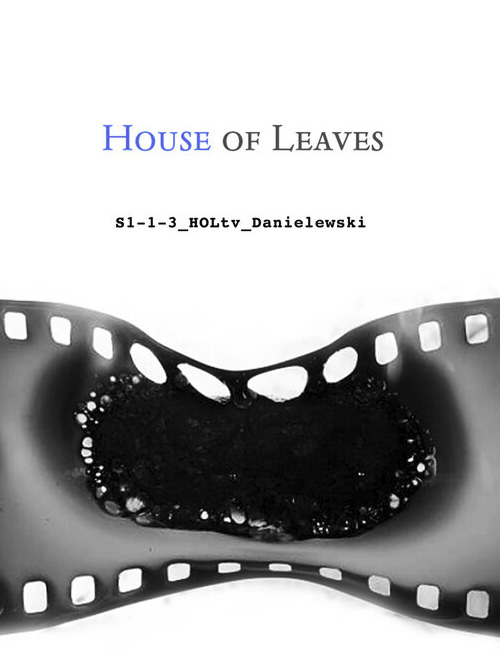
Not that one. Not actually a book, either. In 2017 Danielewski was in talks to develop a TV series based on House of Leaves; ultimately it came to nothing, but he’s released the screenplays he wrote for three episodes. It’s not an adapation of the book — well, it is an adaptation of the book, but it’s also a sequel to the book, and maybe a reboot of the book? The premise is relatively straightforward: all that stuff really happened. beloved novel House of Leaves by world-renowned author Mark Z. Danielewski is revealed to have been plagiarized from an actual manuscript by an actual Johnny Truant. The documentary Truant describes really exists, too — which means so do the Navidsons and the house. All of it was covered up by nefarious forces for arcane ends — until now. Being a screenplay, it’s of course not engaging in any of the typographic weirdness that characterized the novel, but it is trying to be as formally playful with the medium of television as the novel was with print. I’m not sure it ever would have been filmable, and it’s incomplete state means you shouldn’t expect much in the way of resolution, but if you’re desperate for something vaguely Backrooms-esque and you can tolerate a little self indulgence on Danielewski’s part you could do worse for the couple of hours it’ll take you read all three scripts.1 They’re $11 on his website.
Danielewski has a new novel out, as well: Tom’s Crossing, which tops out at 1,200 pages and which I will not be reading.
Attila Veres, This’ll Make Things a Little Easier
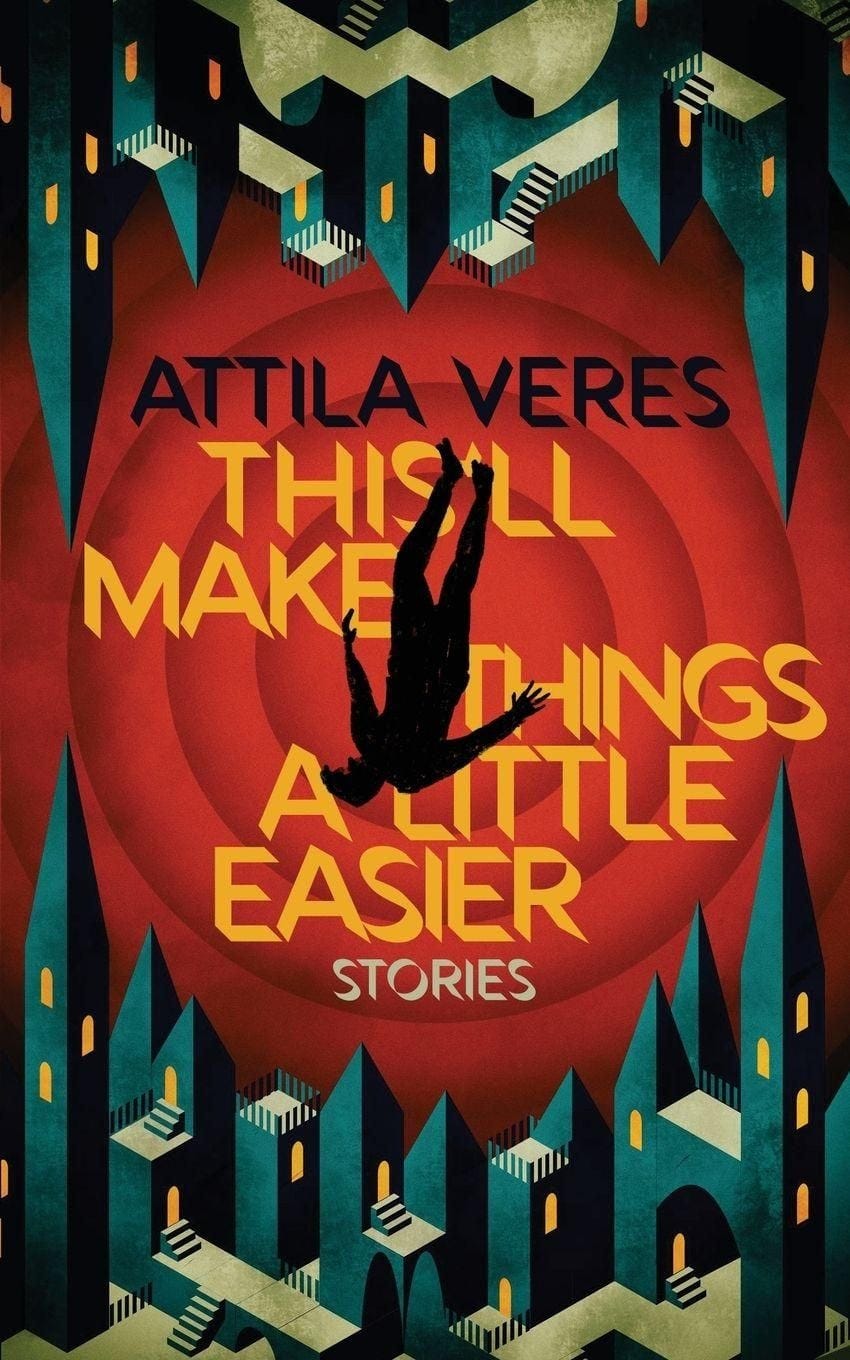
Attila Veres’s 2022 collection The Black Maybe was noteworthy for being one of the best horror collections in recent years (even though it didn’t win the Bram Stoker that year), and also because almost no one had ever heard of Attila Veres. Only a portion of the Hungarian author’s work (not including his novel) have been translated into English; this is his second collection in the language. Moreso than the first, it’s an interrelated connection: the stories touch on each other sometimes directly, sometimes obliquely, and all work around the broad theme of “capitalist horror.” It’s very good, even if I thought that theme was overstaying its welcome a bit by the end. Veres writes cosmic horror in the sense that his works gesture at incomprehensible cosmos full of occulted workings and alien consciousnesses, rather than “cosmic horror” in the sense that Cthulhu shows up and makes you insane. (Although, actually, Cthulhu does sort of show up at one point.) That’s a skill on its own, but it really stands out against the backdrops of hideous banality that Veres conjures so well. And, crucially, his prose is good.
Christopher Buehlman, Between Two Fires
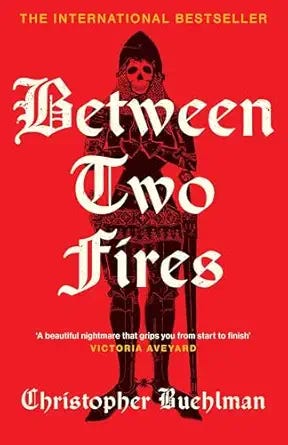
There are almost no books that can be called “medieval horror” and almost none of them are good. Between Two Fires is really, really good. Too often they rely on an image of the Middle Ages out of a Victorian Protestant character: opressive Christianity, hideous judicial torture, and everyone smelling bad. This unfair; worse, it’s boring. The Middle Ages were deeply weird, but this dimension of the period is something that modern works trouble to represent: The Northman did it a bit, The Green Knight did it a lot; Between Two Fires does it, too. It feels less like a modern horror novel set in the Middle Ages than a really scary outgrowth of actual medieval literature and history. At its opening, God has abandoned humanity; the Fallen, growing bold, stage an assault on mankind in the form of the Black Death. In France, in the midst of the Hundred Years’ War, a bandit knight meets a young girl who may or may not be holy and must take her to the papacy in Avignon. Out of print for a while, the book has been amassing a cult following and is now back in (a very nice) hardcover printing.
You should also read The Rawk Shark Texts. Please, please read The Raw Shark Texts.